- More Blogs

- How DVGO Reimagines Medical Travel as a Curated Cultural Experience
How DVGO Reimagines Medical Travel as a Curated Cultural Experience
 Apr 14, 2026
For Many Overseas Patients, Medical Travel Is More Than Treatment
For many overseas Chinese and international patients, traveling to China for medical care has traditionally been a stressful, purely functional experience. Long waiting times, complex hospital systems, unfamiliar paperwork, and language barriers often turn necessary treatment into an exhausting process.
Beyond medical procedures, patients frequently face logistical challenges—arranging reliable transportation, securing suitable accommodations, and navigating unfamiliar cities. These factors can significantly increase anxiety and reduce overall satisfaction during the journey.
However, medical travel in China is evolving.
Today’s patients are no longer seeking treatment alone. They are increasingly looking for a structured, comfortable, and meaningful recovery journey—one that integrates healthcare with cultural experience, emotional well-being, and personalized support.
DVGO addresses this shift by combining AI-driven itinerary planning with localized service execution, transforming medical trips into holistic, recovery-friendly travel experiences.
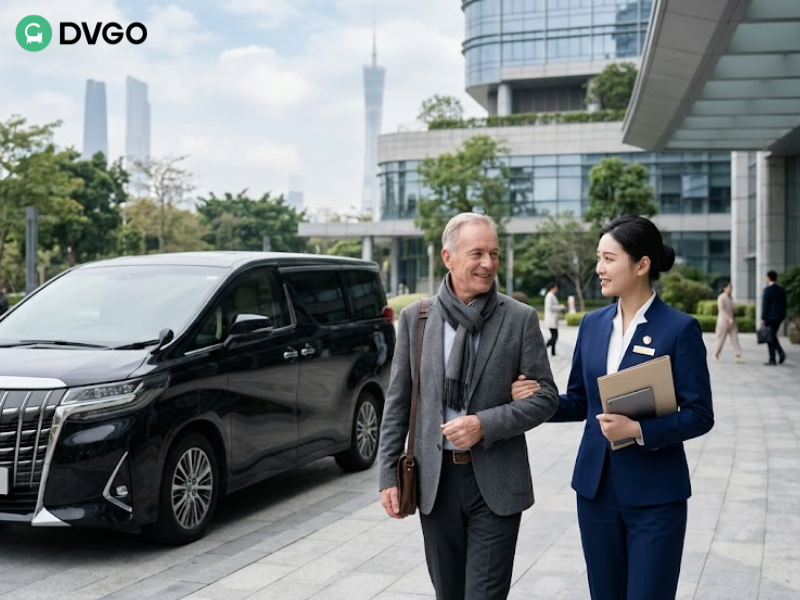
The Evolution of Medical Travel: Why Healing Requires Cultural Context
Travelers Now Expect More Than Clinical Outcomes
Modern medical travelers—especially overseas Chinese—are placing greater value on experiences beyond the hospital. While medical quality remains the foundation, patients now prioritize:
Reconnecting with cultural heritage through historic neighborhoods and landmarks
Experiencing authentic local cuisine aligned with recovery needs
Engaging in cultural activities such as exhibitions, traditional crafts, or performances
Medical travel is no longer a transactional process. It is becoming a hybrid of healthcare, lifestyle, and cultural reconnection.
The Gap in Traditional Medical Travel Services (Expanded)
Despite evolving patient expectations, most traditional medical travel providers still operate within a fragmented service model. Their role typically ends after arranging hospital appointments, leaving patients to independently manage all non-medical aspects of their journey.
This creates multiple layers of friction throughout the experience:
Operational Gaps in Daily Logistics
Patients are required to coordinate essential logistics without local knowledge or support:
Transport complexity Navigating between hospitals, hotels, pharmacies, and recovery spaces often involves unreliable taxis, language barriers, or confusing public transport systems.
Disconnected accommodation planning Hotels are rarely selected based on proximity to hospitals or recovery suitability (quietness, accessibility, medical-friendly amenities).
Time inefficiency Poor coordination between appointments and travel leads to unnecessary waiting, fatigue, and missed recovery windows.
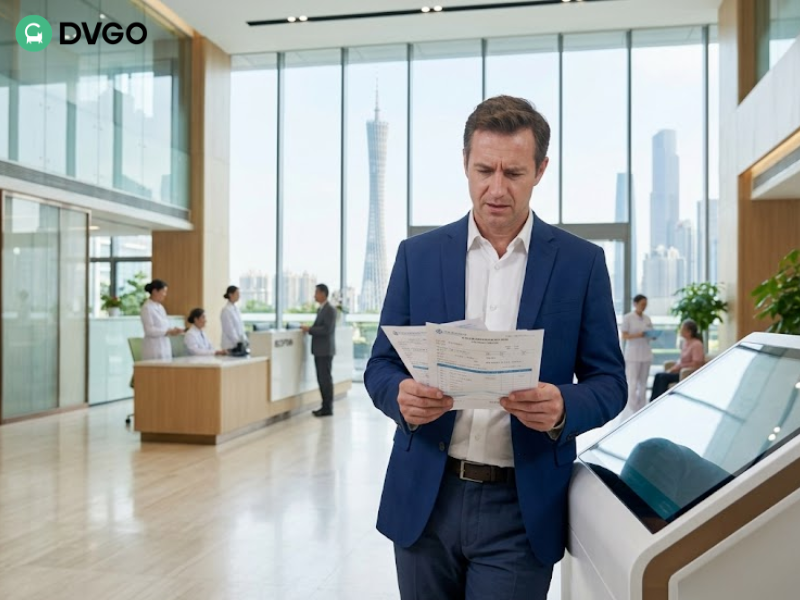
Lack of Recovery-Oriented Lifestyle Planning
Traditional agencies do not extend into lifestyle management, which is critical for recovery:
Dietary uncertainty Patients must independently identify meals that align with post-treatment dietary restrictions, often without understanding local food preparation.
Unstructured downtime Patients either remain inactive (leading to boredom and stress) or engage in unsuitable activities that may hinder recovery.
No energy management There is no guidance on how to balance rest, movement, and engagement throughout the day.
Cultural & System Barriers
Even for returning overseas Chinese patients, modern urban systems introduce new challenges:
Digital payment ecosystems (e.g., QR-based systems)
App-based service bookings (transport, food delivery, reservations)
Rapidly changing city layouts and infrastructure
These barriers create cognitive overload, especially for patients already under physical and emotional stress.
Core Problem: Lack of Integration
The fundamental issue is not service quality—but lack of system integration.
Patients are forced to manage three disconnected layers:
Medical treatment
Daily logistics
Recovery and lifestyle experience
Without a unified system, even high-quality medical care results in a suboptimal overall journey.
Table: Traditional Medical Travel vs. Integrated DVGO Approach
| Dimension | Traditional Medical Travel | DVGO AI-Curated Experience |
| Service Scope | Hospital appointment only | End-to-end journey management |
| Transport | Self-arranged, inconsistent | Pre-planned, seamless routing |
| Accommodation | Generic hotel booking | Recovery-friendly, location-optimized |
| Diet | No guidance | Personalized nutrition planning |
| Daily Schedule | Unstructured | AI-optimized based on energy & recovery |
| Cultural Experience | Not included | Integrated, low-impact activities |
| Adaptability | Static planning | Real-time dynamic adjustments |
| Patient Stress Level | High | Significantly reduced |
| Overall Experience | Functional | Holistic and restorative |
AI-Curated Itineraries: Recovery Meets Exploration (Expanded)
Personalized, Low-Impact Sightseeing
DVGO’s AI system transforms traditional itinerary planning into a dynamic, condition-based model, where every activity is aligned with the patient’s recovery stage, physical capacity, and medical schedule.
Instead of fixed itineraries, patients receive adaptive plans that evolve throughout the journey.
Medical Days: Controlled, Minimal-Load Engagement
On treatment days, the priority is stability and low physical demand.
Recommended experiences include:
Short-radius activities within 5–10 minutes of clinics or hotels
Quiet environments such as cafés, teahouses, or reading spaces
Micro-cultural exposure (e.g., small galleries or heritage corners)
Flat, barrier-free walking routes with seating availability
Strategic Goal: Maintain light engagement while minimizing fatigue and logistical risk.
Recovery Days: Gradual Cultural Immersion
As recovery progresses, the system introduces controlled expansion of activity intensity:
Scenic but passive experiences (e.g., river cruises)
Climate-controlled environments (museums, exhibitions)
Hands-on but low-strain workshops (tea ceremony, calligraphy, pottery)
Strategic Goal: Reintroduce movement and cultural connection without disrupting recovery.
Smart Routing for Comfort and Safety (Expanded)
Physical Load Optimization
DVGO eliminates common physical stressors by design:
Avoids stairs, long walking distances, and crowded zones
Prioritizes shaded routes, indoor transitions, and rest points
Ensures access to seating every 10–15 minutes of movement
Medical Synchronization Layer
Unlike traditional travel plans, DVGO integrates directly with medical schedules:
Aligns activities with appointment timing
Automatically buffers delays or extended consultations
Inserts recovery windows between movements
This prevents over-scheduling and preserves patient energy.
Dynamic Adjustment System
Plans are continuously updated based on:
Real-time energy feedback
Weather conditions
Traffic and travel time changes
Recovery progress
This transforms the itinerary from a fixed schedule → responsive system.
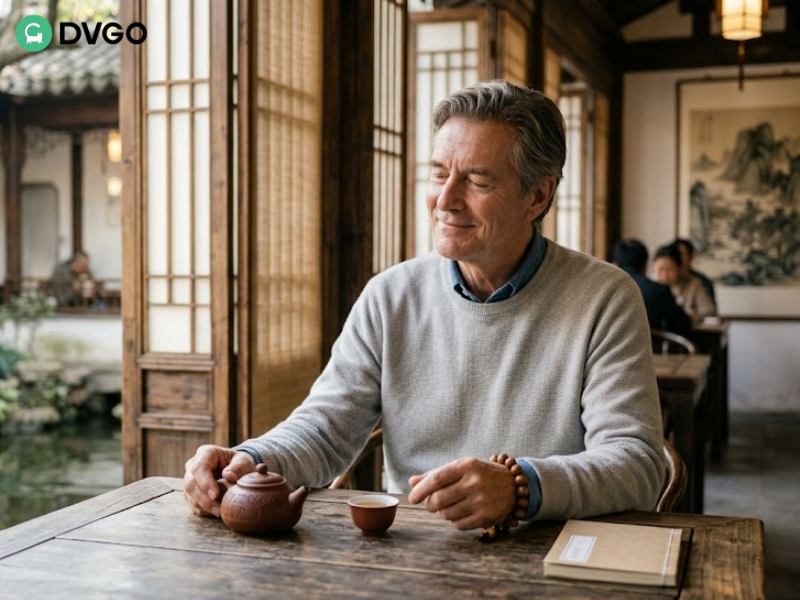
Energy-Based Daily Structuring
Each day is structured according to natural recovery rhythms:
| Time Period | Activity Type | Purpose |
| Morning | Indoor, low-energy (tea, museums) | Stable start, minimal strain |
| Early Afternoon | Light outdoor exposure | Gentle movement, mood improvement |
| Evening | Quiet cultural engagement | Relaxation without stimulation |
Special Optimization for Post-Operative Patients
For higher-sensitivity cases, DVGO applies stricter constraints:
Walking distance minimized to essential movement only
Elevator-accessible routes only
Immediate proximity to medical facilities
Optional companion-friendly parallel itineraries
Healing Through the Palate: Nutrition as Part of Recovery
DVGO integrates dietary planning into the travel experience, aligning traditional Chinese wellness principles with modern medical needs.
Personalized Nutrition Strategy
Customized meals based on medical conditions and recovery stages
Light, low-salt, and nutrient-rich options
Herbal teas and broths supporting digestion and energy recovery
Local Dining with Recovery Focus
Traditional medicinal soups for healing and vitality
Clean, organic meals with balanced nutrition
Dining locations integrated into travel routes to reduce fatigue
Food becomes both a healing tool and cultural experience, reinforcing recovery while enhancing the journey.
Integrated Wellness: Beyond Medical Treatment
DVGO expands medical travel into a full-spectrum wellness experience:
Guided meditation sessions in quiet cultural environments
Tai Chi and Qigong practices for circulation and stress reduction
Recovery-focused therapies such as massage and aromatherapy
These activities are scheduled in alignment with medical and travel plans, ensuring a balance between rest, treatment, and engagement.
Conclusion: From Medical Trip to Healing Journey
Medical travel is no longer defined solely by procedures or hospital visits. It is shaped by:
The comfort of the journey
The quality of daily experiences
The ability to recover physically and mentally
DVGO bridges the gap between healthcare and lifestyle by delivering structured, personalized, and culturally immersive medical travel solutions in China.
Explore how DVGO builds your personalized medical travel experience in China:→ Learn how DVGO creates your healing journey